Storm Resilience
Properly pruned trees handle high winds much better than lopped trees.
We manage overgrown trees safely and correctly—avoiding the damage caused by traditional lopping.
Servicing Bald Hills with proper tree management solutions.
If you are searching for Tree Lopping in Bald Hills because your tree is too big, our team offers safer, council-approved alternatives.
Big flood-country gums in Bald Hills respond terribly to lopping. They rot quickly and drop dangerous limbs in the next storm cell. We protect your property with correct arborist techniques.
Properly pruned trees handle high winds much better than lopped trees.
Healthy, attractive trees add value; butchered trees look terrible and pose a liability.
Brisbane City Council prohibits destructive lopping on protected vegetation.
We evaluate why you want the tree lopped and provide better alternatives.
We suggest canopy reduction or complete removal if the tree is inappropriate for the space.
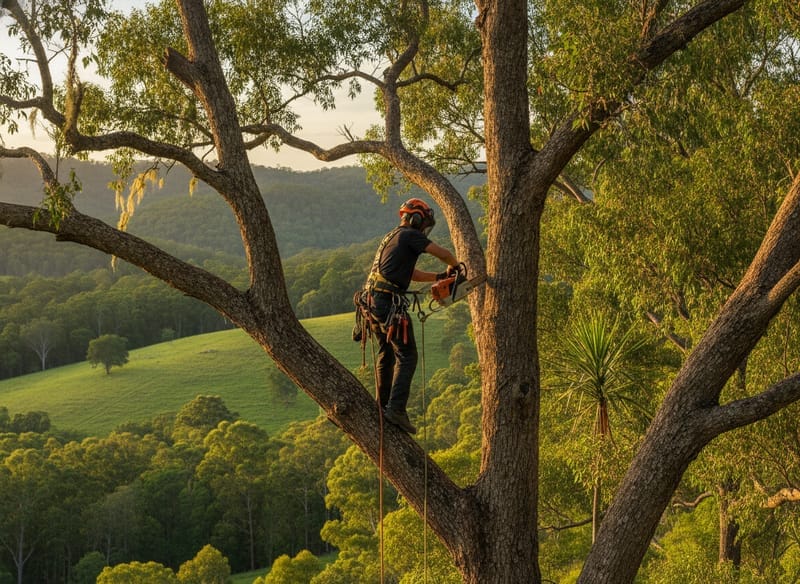
Our climbers make precise, standard-compliant cuts.
All green waste is removed, leaving your yard pristine.
Welcome to Brisbane North Arborist. When it comes to professional Tree Lopping Bald Hills, our team of qualified climbers and ground crew is here to help.
Whether you are managing an acreage property out near the Pine River or a residential block closer to the highway, oversized and encroaching trees can quickly become a hazard. People often ask us for tree lopping when they simply want a large tree made smaller, safer, or less intrusive. However, achieving this safely requires more than just hacking off branches.
We understand the subtropical climate, the local soil conditions, and the severe summer storms that roll through Brisbane North. Our goal is to reduce the size and hazard of your trees while maintaining their structural integrity. We ensure your property is safe, clearances are met, and your trees remain healthy long after our trucks have left your driveway.
There is a massive difference between indiscriminately slashing a canopy and performing a strategic size reduction. In the horticultural world, traditional lopping or topping involves making crude heading cuts that leave large stubs. This outdated practice causes severe structural problems. It strips the tree of its food source, introduces rot, and forces the tree to push out weak, fast-growing epicormic shoots. Within a few seasons, those weakly attached shoots become major drop hazards during Brisbane's intense summer storm season. If you are looking for Tree Lopping Bald Hills residents can rely on, our solution is vastly different. We strictly follow the AS4373 Pruning of Amenity Trees standard. When you ask us to reduce a tree, our AQF Level 3 climbing arborists assess the canopy and use proper target pruning techniques. Instead of leaving raw stubs, we cut back to branch collars or appropriate lateral growth nodes. This gives you the clearance and size reduction you want—whether that is keeping branches off your roof or letting light into your yard—without creating a ticking time bomb of weak regrowth. We protect your home, your family's safety, and the long-term health of your landscape.
When you need a tree's size reduced or its canopy managed, our team employs several AS4373-compliant techniques. We use the right approach to give you the clearance and safety of a "lopped" tree, but in a sustainable way that preserves the tree's structural integrity.
This is the safest and most effective way to reduce the overall height and spread of a tree. We selectively prune branches back to lateral growth points, shrinking the canopy profile without resorting to topping. We typically aim to remove no more than 25–30% of the live crown in a single event to maintain the tree's health and vitality.
If a tree is hanging too low over your driveway, shed, or footpaths, we systematically remove the lower branches. This provides clear vertical space underneath without compromising the upper canopy, resolving clearance issues safely and improving access for vehicles and pedestrians.
Sometimes a tree feels too large simply because it is blocking wind or natural light. Our climbers selectively remove secondary branches throughout the canopy to reduce foliage density. This allows gale-force winds to pass through harmlessly during storm season, significantly reducing the risk of root-plate failure.
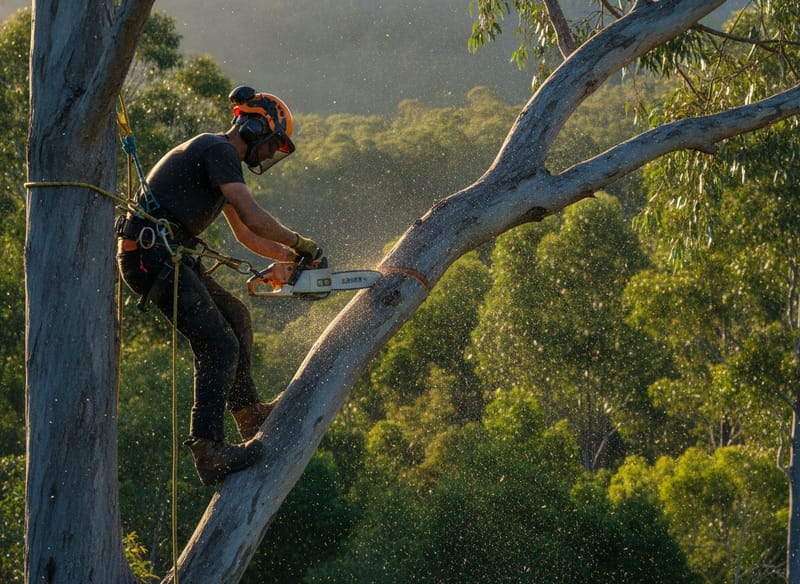
If a specific limb is encroaching on your roofline, powerlines, or neighbouring property boundaries, we target just those problematic branches. We use top-handle climbing chainsaws and insulated pole pruners to achieve exact clearances while preserving the rest of the tree.
Following extreme weather, we step in to safely remove shattered limbs and balance the remaining canopy. In these situations, heavier reduction cuts may be required to salvage the tree or stabilize it before final removal can be planned.
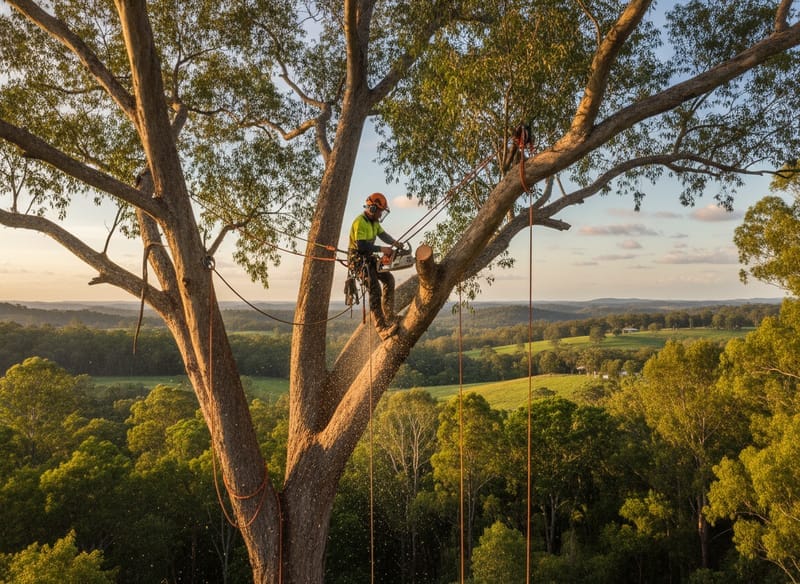
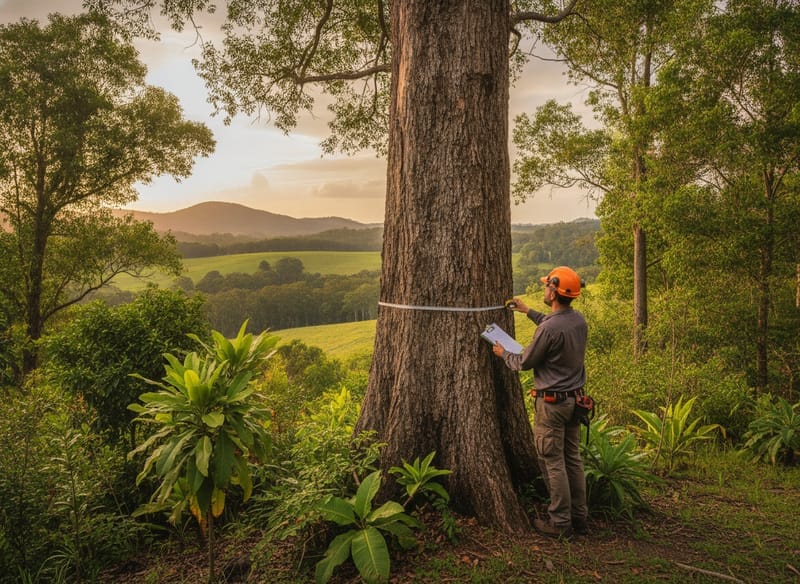
Our process is designed to be seamless from your first phone call to the final sweep-up. When you contact us for tree reduction, we start with a free, on-site consultation at your property. We inspect the tree, discuss your goals, and explain the safest, most effective pruning methods to achieve the clearance you need. Once you approve our detailed quote, our crew arrives on schedule. We conduct a pre-start site safety assessment, identifying obstacles like overhead powerlines, fences, and safe drop zones. For inaccessible backyard trees, our climbers use advanced rope-access techniques to navigate the canopy. If access permits, we may utilize Elevating Work Platforms (EWPs) or spider lifts to reach outer limbs efficiently. Our climbers meticulously dismantle the overhanging or overgrown sections, rigging large branches to lower them safely without damaging the ground or structures below. On the ground, our crew processes the debris through our commercial 12-inch wood chippers. Finally, we rake and blow down the site, leaving your yard cleaner than we found it. We even offer to leave the fresh mulch behind for your gardens if requested.
Tree work is inherently high-risk, which is why compliance and safety are non-negotiable for our team. Every job we undertake strictly adheres to AS4373 (Pruning of Amenity Trees), ensuring our cuts promote healing rather than decay.
Our crew consists of AQF Level 3 qualified climbing arborists and ground staff holding current tickets for Working at Heights, EWP operation, Chainsaw cross-cut, and First Aid. We carry Public Liability insurance and comprehensive WorkCover for all employees. You can have total peace of mind knowing that our trucks, chippers, and personnel are fully licensed and insured to protect your property and our people.
Operating in this specific pocket of Brisbane North requires local knowledge. Providing premium Tree Lopping Bald Hills means dealing with a diverse mix of established residential blocks, larger semi-rural acreages, and pockets of native vegetation. Our team frequently manages local native species like towering flooded gums, dense brush box, and legacy hoop pines that have outgrown their suburban boundaries.
We also deeply understand the Brisbane City Council (BCC) planning scheme. While routine pruning and AS4373-compliant canopy reduction can often be done without council approval, significant works on protected species or trees within designated Koala Habitat Areas require strict compliance. The suburban terrain in Bald Hills can also present narrow access constraints, requiring our specialized spider lifts or rope-access techniques instead of heavy cherry pickers. We navigate these local environmental and access challenges every day, ensuring your property remains compliant and the work is done flawlessly.
After we complete a canopy reduction, the tree will need time to adjust. Keep an eye on the soil moisture, especially during Brisbane's dry winter months, and consider applying the fresh mulch we left behind over the structural root zone to retain moisture and regulate soil temperature. Avoid adding high-nitrogen fertilizers, as this can encourage rapid, weak epicormic growth. A properly reduced tree should not need attention for several years. However, if you notice significant deadwood appearing or if severe summer storms cause visible structural damage, contact our team for a follow-up assessment to keep your canopy safe and sound.
Pricing for canopy reduction or removal depends on the size of the job.
We provide honest advice and free quotes to ensure you get the right outcome.
We provide proper tree care solutions across the northern corridor.
Contact our arborists for professional canopy reduction and tree management.
Get Expert Advice & Quote