Safer Property
Reduce the chance of weak, lopped branches snapping in high winds.
Managing overgrown trees in McDowall with safe, sustainable canopy reduction and expert arborist care.
Providing tree management solutions throughout McDowall and Brisbane North.
If you are looking for Tree Lopping McDowall to deal with a tree that has outgrown your yard, we provide tailored solutions.
Many properties in McDowall have trees that were incorrectly lopped years ago, resulting in hazardous epicormic shoots. We specialise in correcting these issues or safely removing the compromised tree.
Reduce the chance of weak, lopped branches snapping in high winds.
Pull overgrown canopies back from neighbour fence lines and gutters.
Achieve your clearance goals with methods that won't rot the trunk.
We assess the overgrown tree and listen to your clearance requirements.
We recommend the safest strategy: proper reduction, pruning, or removal.
Our climbers perform the agreed work with precision and safety.
All cut material is processed and taken away.
If you are managing an established property in the northern suburbs, you know how quickly our subtropical climate can turn a beautiful canopy into an overgrown hazard. When residents search for Tree Lopping McDowall, they are usually looking for a way to regain control of a tree that has grown too large, is encroaching on a roofline, or blocking out the sun. At Brisbane North Arborist, we are your local experts in safely reducing and managing large trees. For homeowners, builders, and property managers across the area, managing tree size is an ongoing necessity. Between the severe summer storm seasons and the rapid growth rates of local native species, ignoring an overgrown canopy is a recipe for property damage. However, reducing a tree's size requires professional precision, not a reckless chainsaw. Our team of qualified arborists doesn’t just hack away at branches. We use modern, compliant techniques to reduce the footprint of your trees safely and sustainably. We bring our own high-capacity chippers, our own tipper trucks, and decades of advanced climbing experience right to your driveway.
In the arboriculture industry, the traditional definition of "lopping" or "topping" refers to cutting branches back to arbitrary stubs. Unfortunately, many unqualified operators still practice this outdated and damaging method. When a tree is brutally lopped, it goes into physiological shock. To survive, the tree rapidly pushes out epicormic growth—weak, spindly shoots that are poorly attached to the outer bark.
DIY lopping or hiring uncertified workers often ends up costing you more in the long run. Here is what typically goes wrong when trees are lopped incorrectly:
At Brisbane North Arborist, we solve this by applying techniques strictly aligned with AS4373 - Pruning of Amenity Trees. When you ask us to make your tree smaller, we use target pruning and precise branch collar cuts. This means we reduce the canopy size and remove hazardous overhangs without leaving ugly stubs or compromising structural integrity. You get the clearance and sunlight you need, while the tree remains safe, healthy, and visually appealing.
When clients contact us to reduce a large overgrown tree, we deploy specific, standard-compliant pruning methods. Our climbers assess the species, age, and health of the tree to determine the absolute best approach to achieve your goals without destroying the canopy.
We selectively prune the outer foliage to reduce the overall height and spread of the canopy. This provides the significant size reduction clients typically want from "lopping," but involves cutting back to appropriate lateral growth points to maintain a natural shape and prevent weak epicormic regrowth.
Ideal for creating clearance over driveways, footpaths, or rooflines. We carefully remove the lowest branches of the canopy, ensuring the structural roots and main trunk are not destabilised by a sudden shift in the tree's centre of gravity.
When a specific limb is causing trouble—such as a heavy branch hanging over a boundary fence, carport, or pool—we target just that section. We perform precise cuts at the branch collar, removing the nuisance weight while leaving the rest of the tree completely intact.
Following a severe Brisbane weather event, compromised trees often need immediate weight taken out of their upper canopy to prevent catastrophic failure. We safely dismantle hazardous, storm-damaged limbs and reduce the sail area to restabilise the tree.
Delivering high-quality Tree Lopping McDowall requires much more than just showing up with a chainsaw. Our process is highly structured to ensure safety, local compliance, and minimal disruption to your property. We manage everything seamlessly from the initial site assessment through to the final cleanup.
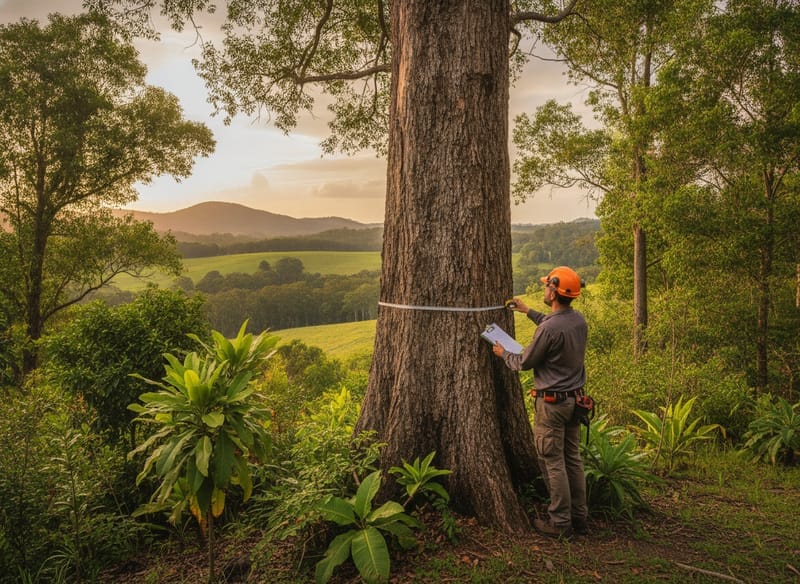
First, our consulting arborist visits your site to understand exactly what you want to achieve. We check the tree’s health and structural integrity, and assess any Brisbane City Council overlays, such as Vegetation Management Overlays or mapped Koala Habitat Areas. This ensures all proposed canopy reduction is completely legal before we provide a clear, upfront quote.
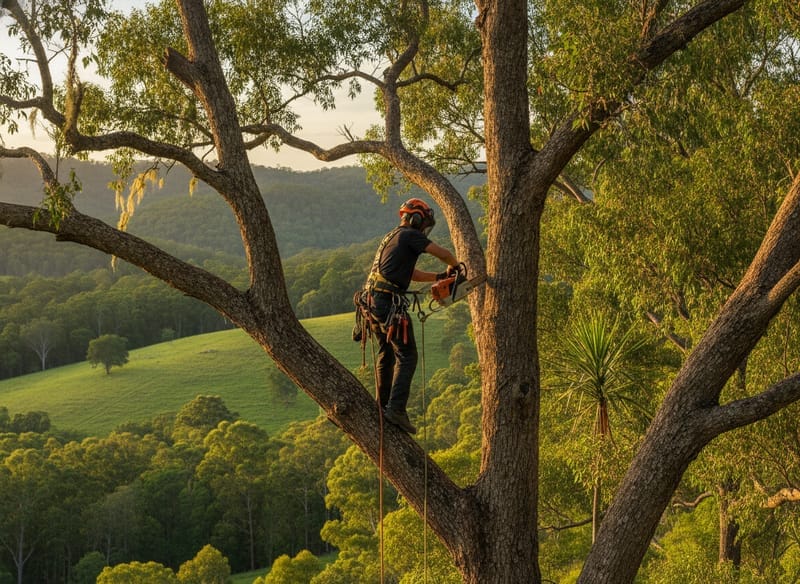
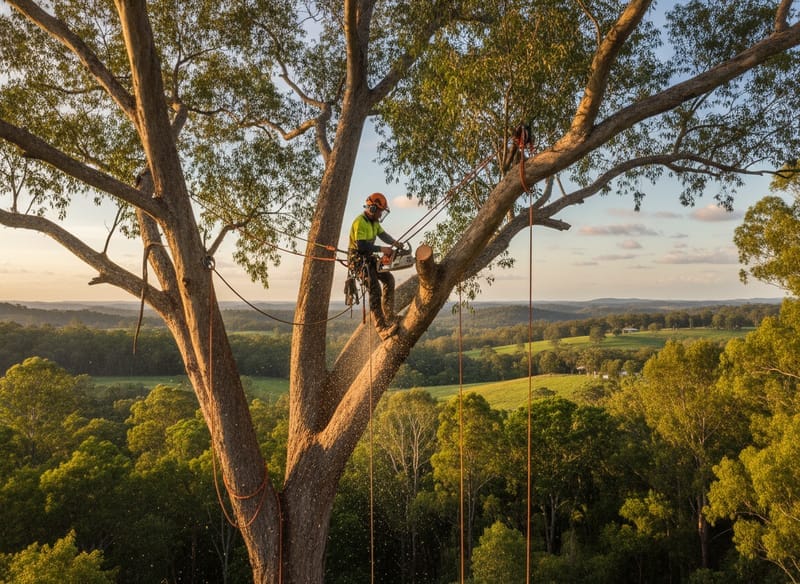
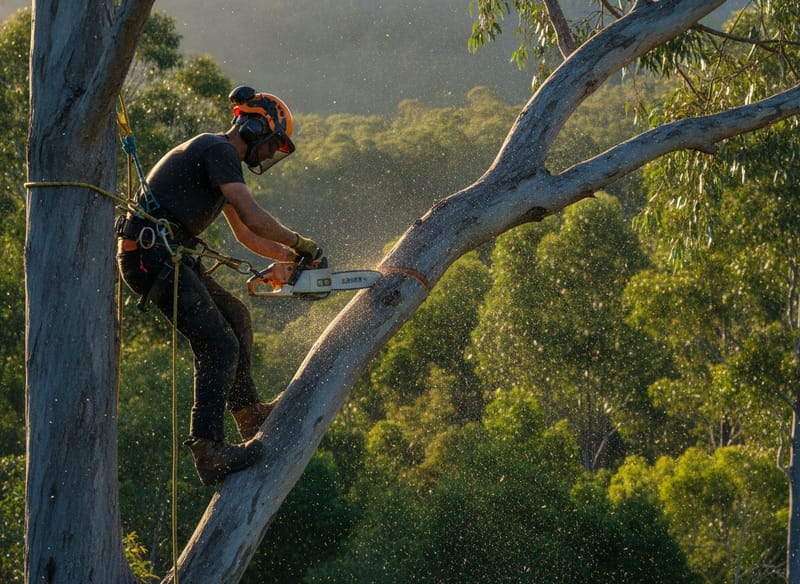
On the day of the job, our crew arrives equipped for your specific block. If you have an accessible suburban yard, we might utilise our Elevating Work Platforms (EWPs). For steeper blocks or tight battle-axe driveways where machinery cannot reach, our AQF Level 3 qualified climbing arborists use advanced rope-access techniques to navigate the canopy safely.
We methodically lower heavy limbs using friction rigging gear to protect your roof, gardens, and fencing below. Everything is fed into our 12-inch wood chippers parked safely on the street. Finally, we rake up the site, blow down the driveways, and haul all green waste away in our tipper trucks, leaving your property completely spotless.
Tree work is inherently high-risk, which is why strict compliance and safety are non-negotiable for our team. We operate strictly in accordance with AS4373 - Pruning of Amenity Trees, ensuring all our canopy reduction cuts promote long-term tree health rather than decay and hazard.
Every lead climber on our team holds an AQF Level 3 in Arboriculture, alongside current Working at Heights, aerial rescue, and chainsaw operation certifications. Brisbane North Arborist is fully insured with comprehensive Public Liability and WorkCover for all staff. Whether we are operating top-handle saws at height, managing traffic on a narrow suburban street, or feeding large limbs into heavy chippers, you have complete peace of mind knowing you are dealing with legitimate, fully insured professionals.
McDowall features a beautiful mix of established suburban blocks, bushland corridors, and properties bordering the Chermside Hills Reserve. This leafy character is a major drawcard for residents, but it brings specific arboricultural challenges that require local expertise.
We frequently manage large, legacy native species across the suburb, such as flooded gums, brush box, and imposing hoop pines. During Brisbane's intense summer storm season, these tall emergents are highly susceptible to wind shear and branch failure if their canopies become too dense. Proactive weight reduction is essential for these species.
Additionally, because McDowall contains significant native wildlife corridors, our team is highly experienced in identifying and working safely around Koala Habitat Areas. We thoroughly understand the Brisbane City Council planning scheme and can advise you on exactly what type of canopy reduction can be performed as exempt maintenance, and what might trigger a council application. From navigating tight battle-axe blocks to managing the aggressive heavy leaf-drop of local Moreton Bay figs, our local crew handles it all.
Once we have completed a professional canopy reduction, the tree will need a short period to recover and adapt to its new wind profile. We recommend providing supplementary watering during dry spells to alleviate stress on the root system and encourage healthy healing around the cut sites. While our AS4373-compliant cuts drastically reduce the chance of excessive epicormic growth, you should still visually monitor the canopy. If you notice rapid, cluster-like sprouting, contact us for an assessment. For large, fast-growing natives and mature boundary screens, we generally recommend placing your property on a 2 to 3-year inspection cycle. This proactive approach allows our team to manage structural weight incrementally, keeping the tree a manageable size and preventing the need for drastic interventions.
Costs for managing overgrown trees depend on the chosen strategy (reduction vs removal).
We provide free, transparent quotes with professional advice on the best outcome.
Servicing overgrown trees across McDowall and surrounds.
Get professional advice and a free quote for canopy management in McDowall.
Request a Free Quote